
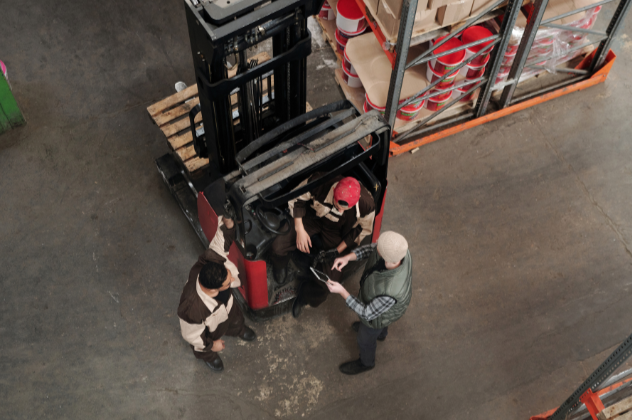

While forklifts are integral to material handling in warehouses, construction sites, and logistics business premises, they degrade over time, necessitating regular forklift maintenance.
Notably, by adhering to a regular and proper maintenance routine, many common forklift problems can be prevented. This proactive approach not only saves on repair costs and downtime but also ensures that your forklifts operate at their maximum potential.
In this article, we’ll discuss the most frequent forklift issues, their causes, and practical solutions that you can easily implement. These solutions are designed to enable you to ensure your equipment runs smoothly.
Common Forklift Issues That Necessitate Regular Forklift Maintenance
1. Electrical Issues
The most common electrical issue with forklifts is battery failure, with the most common battery issues including:
- Dead Battery: This occurs when the battery will not accept a charge, and it’s likely due to sulfation. Notably, you can avoid this issue by occasional equalization charging.
- Low Electrolyte Levels: If low, top up with distilled water, but only halfway.
- Corroded Terminals: Clean the terminals with a baking soda solution and brush out with anti-corrosion gel.
Notably, for lead-acid batteries, charging to capacity, deep discharging, and overcharging all shorten battery life. Therefore, you should be keen to charge the batteries correctly.
2. Internal Combustion Forklift Issues
Gasoline, diesel, or LPG internal combustion forklifts can develop engine issues, which decrease performance.
The most common engine issues include:
- Hard Stalling or Cranking: This can be caused by dirty plugs, a clogged carburetor, or a faulty fuel filter. Notably, you can prevent the problem by changing or cleaning filters on a regular schedule and inspecting ignition components.
- Overheating: This is usually a result of a cracked radiator or low coolant levels. Importantly, you can check for leaks and the flow of coolant.
- Too Much Smoke: Black smoke and blue smoke caused by burned oil are due to a rich fuel mixture. Importantly, you must repair the carburetor or piston rings and change the valves.
Importantly, periodic air filter service and oil changes will also help prevent overheating and mechanical engine issues.
3. Hydraulic System Failures
Failure of the hydraulic system will lead to hydraulic failure.
Common hydraulic system failure issues include:
- Low Hydraulic Fluid: Check for leaks and refill to the necessary level.
- Dirty Fluid: Dirty or worn fluid will lead to pump and valve wear. Replace hydraulic oil at manufacturer intervals.
- Seals or Hoses Damaged or Worn: This is due to leaks resulting from damaged or worn hoses or seals, and should be replaced as necessary.
4. Tyre Wear and Damage
Forklift tyres are designed for use on rough terrain and will therefore wear out over time.
Common tyre problems and solutions include:
- Pneumatic Tyre punctures and under-inflation necessitate the prompt repair of the punctures and maintaining tyres at the proper pressure.
- Solid Tyres wear out or get damaged and need replacement when the tread is low.
- The tyres unevenly wear if the problem is misalignment and require aligning the steering or axle components.
5. Brake Problems
Faulty brakes are a safety hazard and can lead to accidents.
Common break issues include:
- Spongy Pedal Brake, where air within the brake hoses inhibits performance. To fix the problem, you should bleed the brakes to evacuate air pockets.
- Worn-out brake pads, which you should replace when braking is insufficient.
- Fluid leaks necessitate inspecting the brake lines and checking the cylinders for leaks.
7. Steering Difficulty
Mainly, lubricate the steering bearings periodically to avoid wear and tear.
Common steering problems include:
- Low power steering fluid, which you need to refill or replace if the system leaks.
- The steering linkage is worn, which can be addressed by tightening or replacing loose or worn components.
- Wheel misalignment, which you can prevent by straightening the steering alignment.
Preventive Forklift Maintenance
Forklift downtime can be avoided by adherence to a daily maintenance schedule, which includes:
- Daily Checkup: Check the fluid, tires, brakes, and lights daily before use.
- Maintenance Schedule: Follow the manufacturer’s recommended maintenance schedule, which includes oil changes, filter changes, and system inspections.
- Operator Training: Trained forklift driver operators not only know how to minimize forklift wear and tear in operation, but also how to identify potential issues and report them to the company before a fault occurs. Mainly, their vigilance and quick reporting are crucial, making them a valued part of the maintenance process.
Conclusion
Primarily, if you can identify forklift problems before they arise and ensure regular maintenance, you will be able to make your forklifts last longer and stay in operation.
While many forklift issues can be handled internally, some are so critical that they necessitate professional maintenance attention. Opting for a professional service for such issues ensures that they are resolved efficiently and effectively, reducing downtime and ensuring the safety of your operations. This knowledge empowers you to make informed decisions about your forklift maintenance.
Lastly, regardless of whether your forklift requires fixing or replacement, at United MHE Pte Ltd, we offer world-class forklift maintenance services. Therefore, you can get the best forklift services from us by contacting us.